

OCD & ERP Therapy in Chicago & Illinois
Mighty Minds Therapy Center provides OCD and ERP therapy for adults throughout Chicago and Illinois
If you are feeling exhausted and overwhelmed by the types of thoughts you are having and it is making it difficult to enjoy your life, then it is time to try therapy. Anxiety and OCD can take up enormous mental and emotional space, affecting sleep, relationships, work, and your sense of peace, even when everything looks “fine” on the outside. You might feel stuck in cycles of worry, doubt, or mental exhaustion that are difficult to break on your own. You don’t need a diagnosis to begin this journey. You just need a desire for relief, clarity, and support. Therapy can help you understand what’s happening, develop effective tools, and reconnect with a life that feels more manageable and fulfilling.
OCD Therapy for Adults in Chicago and Illinois
OCD can look different from person to person. You may struggle with contamination fears, checking, harm-related intrusive thoughts, relationship OCD, scrupulosity, sexual intrusive thoughts, perfectionism, or a constant need for certainty. Compulsions aren't always visible. Mental reviewing, reassurance seeking, researching, analyzing, and trying to “figure out” your thoughts can also become part of the OCD cycle.
OCD therapy can help you learn to respond differently to intrusive thoughts and reduce the compulsions and avoidance that keep OCD going. Treatment is individualized and may incorporate Exposure and Response Prevention (ERP), Cognitive Behavioral Therapy (CBT), Acceptance and Commitment Therapy (ACT), and other evidence-based approaches.
What Is ERP Therapy?
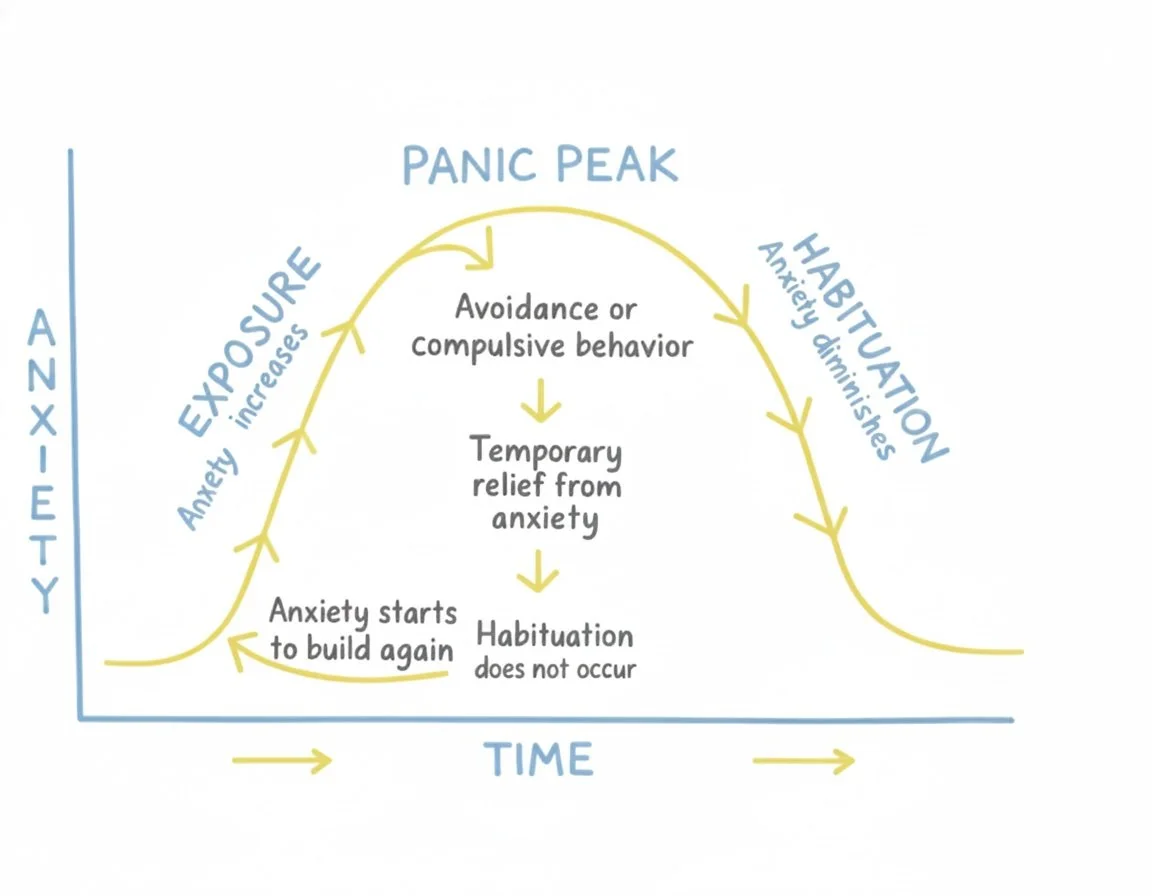
Exposure and Response Prevention (ERP) therapy is an evidence-based treatment for obsessive-compulsive disorder (OCD) or anxiety. ERP helps you gradually face situations, thoughts, images, sensations, or uncertainties that trigger anxiety or discomfort while learning to resist the compulsions or rituals you typically use to feel better.
With OCD, compulsions can provide temporary relief, but they can also reinforce the cycle of fear and anxiety over time. Compulsions aren't always visible. They may include checking, reassurance seeking, researching, avoiding certain situations, mentally reviewing events, analyzing thoughts, or trying to achieve a feeling of certainty.
In ERP therapy, you and your therapist work together to identify the patterns that keep OCD going and develop a gradual, individualized plan for responding differently. Exposure exercises are introduced at a pace that is appropriate for you. The goal isn't to eliminate every intrusive thought or make anxiety disappear- it is to help you learn that you can experience uncertainty or discomfort without relying on compulsions to get through it.
ERP can be used to treat many different forms of OCD, including contamination fears, checking, harm-related OCD, relationship OCD (ROCD), scrupulosity or religious/moral OCD, sexual-orientation or sexual intrusive thoughts, perfectionism, and other unwanted intrusive thoughts.
At Mighty Minds Therapy Center, ERP therapy is available through telehealth for adults throughout Illinois, including Chicago. Treatment is individualized to your specific OCD symptoms, goals, and needs.
OCD: recurrent, unwanted thoughts and fears (obsessions) and repetitive behaviors or mental acts (compulsions) that an individual feels driven to perform in response to them. An individual engages in these behaviors (compulsions) to try to control the thoughts or get rid of the thoughts.
Common OCD Thoughts Include (not an exhaustive list):
"Just right" feelings that consume your time: Needing things to feel perfect, complete, or symmetrical before you can move on
· Harm: Fear of hurting yourself or others accidentally or intentionally
· Contamination: Fear of germs, illness, chemicals, or dirt
· Doubt/Checking: Fear you made a mistake (e.g., left the stove on, door unlocked)
· Religious/Moral (Scrupulosity): Fear of sinning, offending God, or being immoral
· Sexual: Unwanted taboo or inappropriate sexual thoughts
· Order/Symmetry: Distress when things feel uneven, misaligned, or “not just right”
· Relationship: Doubts about loving your partner or being loved
Common OCD Compulsions Include (not an exhaustive list):
Checking: Doors, locks, appliances, body sensations
Cleaning/Washing: Hands, surfaces, objects excessively
Repeating: Actions, movements, or phrases until it feels “right”
Mental Rituals: Counting, praying, neutralizing thoughts, reviewing memories
Reassurance-Seeking: Asking others for confirmation or comfort
Avoidance: Staying away from triggers, places, or people
Ordering/Arranging: Lining things up symmetrically or precisely
Confessing: Repeatedly admitting thoughts or perceived wrongs
OCD Signs & Symptoms

Common Anxiety Signs Include (not an exhaustive list):
Constant worry or “what if” thinking
Racing or scattered thoughts
Avoiding anxiety triggering situations
Ongoing physical tension or restlessness
Sleep problems or waking up exhausted
Feeling easily overwhelmed or panicky
Unexplained physical symptoms (heart, stomach, dizziness)
Over planning or needing certainty
Feeling on edge or unable to relax
Social interactions feel draining or overanalyzed
Anxiety Signs & Symptoms
You May Be Considering OCD Treatment But Have More Questions…
Exposure Response Prevention (ERP) sounds scary to me. What if I cannot do it?
Many people begin treatment feeling unsure about whether they can handle ERP, and that concern is completely understandable. You will never be asked to do anything on your own that you don’t want to do. Exposures are introduced gradually and thoughtfully, at a pace designed to feel manageable rather than overwhelming. Your therapist will collaborate with you to create exposures that are challenging but tolerable, with the goal of helping you feel capable and successful.
OCD often insists that you can’t do hard things, but you won’t face those thoughts alone. We will support you at every step, helping you gently challenge them along the way. We are confident that ERP is a safe and effective treatment, and that with the right approach and support, you can learn to manage OCD and regain a greater sense of control in your life.
Cognitive Behavioral Therapy (CBT)
An evidence-based, structured approach that helps you recognize and reshape unhelpful thinking and behavior patterns.
Our Therapy Approaches
We use an evidence-based approach to help you find your path and work on your goals. Our treatment methods include:
Exposure & Response Prevention Therapy (ERP)
ERP is the gold standard when it comes to treatment for anxiety and OCD. It is an evidence-based approach that helps individuals gradually face intrusive thoughts and fears, reduce compulsive behaviors, and build confidence in managing anxiety.
Acceptance & Commitment Therapy (ACT)
An evidence-based approach that focuses on accepting internal experiences while committing to behaviors that align with personal values.
Motivational Interviewing (MI)
An evidence-based approach that helps individuals explore ambivalence, strengthen motivation, and make meaningful changes aligned with their values.
Dialectical Behavior Therapy (DBT)
An evidence-based approach designed to help individuals manage intense emotions, improve relationships, and navigate life’s challenges. more effectively.
Client Centered & Individualized
An approach that recognizes each person’s unique experiences, goals, and strengths. It tailors therapy to meet individual needs.

IS IT TIME TO CONSIDER THERAPY FOR ANXIETY
If anxiety is getting in the way of your confidence, self-worth, and relationships, then that’s reason enough to seek support. Book a complimentary consultation to see how our anxiety specialists can help